Scraps, Swaps and Second Lives: How Camden Makers Are Leaving the Craft Shop Behind
On a damp Saturday in Gospel Oak, a queue forms outside a church hall. Nobody is selling anything. The draw is a long table covered in half-used balls of yarn, faded denim, odd buttons and a box of zips that looks like it has survived three house moves. This is a craft supply swap, and it has become one of the most quietly radical events in Camden’s making scene.
In 2026, with craft shops pushing ever more kits, colour-coordinated bundles and single-use plastic packaging, a growing number of North London makers are going the other way. They are sourcing materials from charity shops, free tables, skips and each other. They are repairing rather than replacing. And they are asking a simple question: what if the best craft supply is already in the room?
The stash is already out there
Nadia Rahman, a textile artist who runs repair circles in Kentish Town, says the shift is partly practical and partly political. ‘Most of us started because we were broke,’ she laughs. ‘Then you realise the amount of good fabric that gets thrown away is obscene. Once you have unpicked a few charity-shop coats, buying new felt feels a bit ridiculous.’
Her studio is full of what she calls ‘pre-loved matter’: wool jumpers waiting to be unravelled, cotton sheets cut into strips, and a jar of buttons that she refuses to sort. She runs a monthly mending session at a community centre off Prince of Wales Road, where people bring damaged clothes and leave with visible repairs that look better than the original.
Charity shops are not a last resort
Tom, a printmaker based near Chalk Farm, uses charity-shop linen and old books for his collagraphs. ‘You have to ask nicely,’ he says. ‘A lot of shops bin textiles that are stained or torn. If you explain you are using them for art, they will often put them aside.’ He recommends checking the remnant bins at local fabric shops, too, and asking if they have offcuts that are too small to sell.
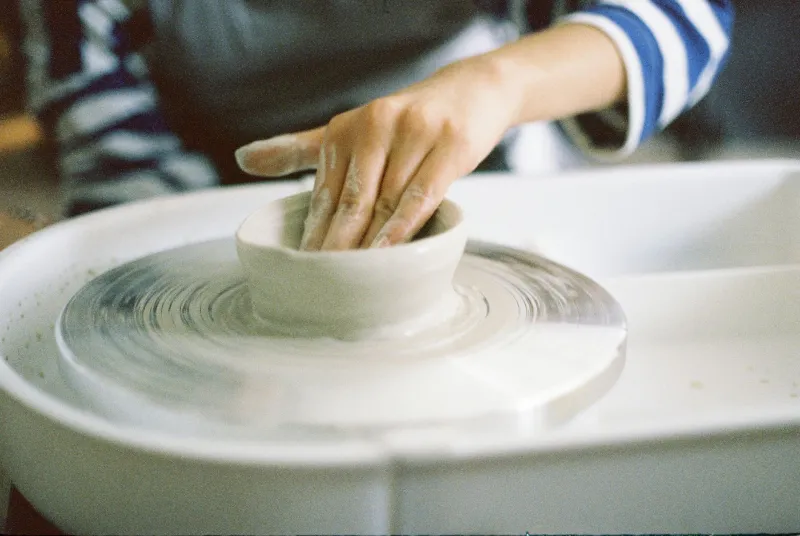
For ceramicists, the zero-waste route is less about material and more about process. Priya, who shares a kiln in Gospel Oak, fires only when the kiln is full, recycles clay scraps and uses a bucket system to settle glaze water before it goes down the drain. ‘It is not glamorous,’ she says. ‘But it means I can make work without pretending the materials appear from nowhere.’
Three rules from local makers
First, ask before you buy. Put a request on your local WhatsApp group, Freecycle or Olio. Someone in Camden has a sewing machine they never use, a bag of wool they inherited, or a stack of magazines waiting for a collage workshop.
Second, learn to see the material, not the object. A stained tablecloth is fabric. A broken necklace is beads and wire. A shrunken wool jumper is stuffing, felt or yarn. This is not about being frugal for its own sake; it is about keeping useful stuff in circulation for longer.
Third, repair in public. Mending at home is good. Mending in a hall with tea and other people is better, because it normalises the idea that things do not have to be perfect to be worth keeping. Camden has a long history of making and fixing, from the markets to the railway workshops. The zero-waste craft scene is just the latest version.
Where to swap, borrow and beg politely
Keep an eye on noticeboards at Kentish Town Library, Gospel Oak Community Centre and the smaller church halls around Dartmouth Park. Supply swaps tend to be advertised by word of mouth and Instagram rather than big posters. Camden Makes will list upcoming swaps as we hear about them.
Charity shops along Kentish Town Road and Camden Road are good for fabric, yarn and occasionally tools. Ask for damaged stock rather than rummaging through the good stuff. Local libraries of things can lend sewing machines and drills. And if you are clearing out your own stash, bag it up, label it clearly and offer it before you bin it.
The bigger picture
The mainstream craft industry would rather you bought a new kit for every project. That is not a conspiracy; it is just how retail works. But community-led creativity offers a different model. It says that skill is more valuable than stuff, that sharing is more interesting than shopping, and that a handmade gift made from donated wool can carry more meaning than a perfect one ordered online.
None of this requires you to be perfect. You do not have to save every scrap or turn your flat into a recycling centre. Start with one swap, one repair, one charity-shop find. The point is not purity. The point is noticing what you already have, and what Camden already has, before you reach for your card.