Flight Mode, Please: What a Phone-Free Hour Actually Does for Camden Makers
Photo: Rayhanphotos, CC BY-SA 4.0, via Wikimedia Commons
At 6.55pm on a damp Thursday, a studio just off Kentish Town Road smells of wet clay, coffee and the particular optimism of people who have brought aprons to a party. Priya, the facilitator, is holding a wicker basket. It looks like something you'd keep onions in. Tonight, it is the phone basket.
“They live here for the next hour,” she says, patting the handle. “Not confiscation. More of a holiday.”
Around the room, twelve adults hover between amusement and low-level panic. One woman checks her phone three times in the time it takes to read a safety notice. A man in a paint-flecked hoodie asks, very reasonably, what happens if his childminder rings. Priya has an answer ready: emergency contact card, studio landline, and a facilitator who will quietly fetch any phone that buzzes with a real-life summons. The basket is an invitation, not a trap.
The first ten minutes are always a bit twitchy
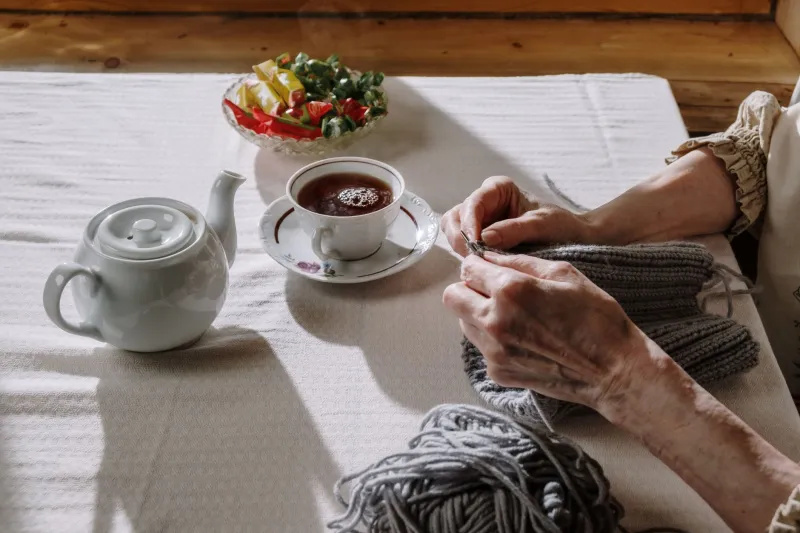
This is a hand-building pottery class, though the ritual is spreading across Camden. There are knit nights near the canal where phones go face-down in a communal bowl, life-drawing sessions in Gospel Oak with a strict no-camera rule, and print workshops in Kentish Town where the wi-fi password is simply not offered. The details differ. The feeling is similar: a room full of adults noticing how often their hands want to reach for something that isn't there.
Hannah, 34, is a first-timer. She is a freelance illustrator from Holloway, which means her phone is also her office, her invoicing system and her main way of knowing whether a client has replied “looks great” or “can we just tweak one thing”. She hesitates at the basket.
“I've got my mum on standby,” she says. “She's had a rough week. I don't want to miss a call.”
Priya offers her the side table option: phone on silent, face-up, at the edge of the room. Close enough to see it light up; far enough that it isn't in her hand. Hannah takes it. Another maker, Sam, puts theirs in the basket but keeps a smartwatch on vibrate. Nobody claps. Nobody scolds. The session bends around real life rather than pretending real life isn't happening.
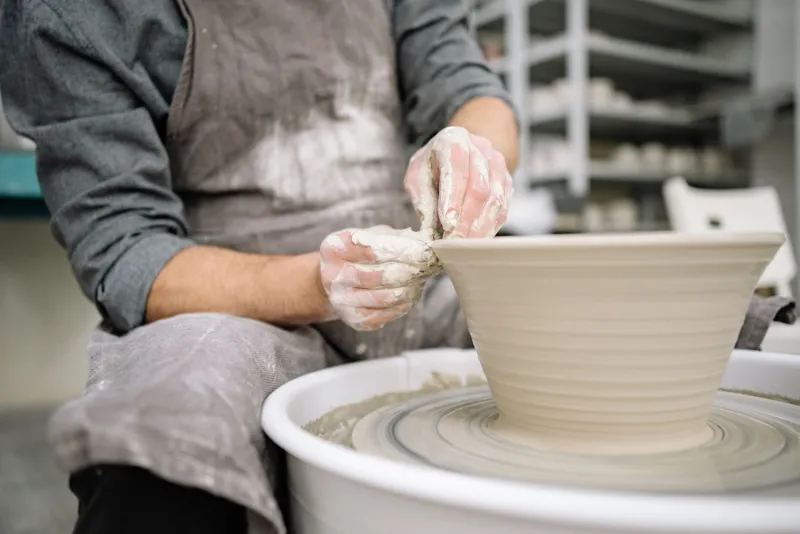
By 7.10pm, the room has settled into the slightly sticky business of wedging clay. You can tell who is used to working with their hands because they lean in. You can tell who is not because they keep looking at the middle distance where a phone would normally be.
What the quiet actually gives you
Priya has been running these sessions since the spring. She says the first ten minutes are always the same: fidgeting, jokes, a few people checking the clock. Then something loosens.
“People think the benefit is that they'll suddenly make better pots,” she says. “Honestly, the pots are still wonky. The difference is that they stop editing themselves. They stop thinking about how it will look online and start thinking about how the clay feels.”
There is something to that. Without a camera in reach, the pressure to document gives way to something more private. The lopsided bowl becomes a bowl, not content. A conversation about glazes lasts longer because nobody is half-reading a notification under the table. One maker, Elena, tells me she reconnected with a friend in the class because neither of them was “doing that thing where you talk in bullet points while scrolling”.
It isn't magic. It's just attention. And attention, in a city that sells distraction at every bus stop, feels increasingly like a craft material in its own right.
The worry list: caring, access and emergencies
Here's where the conversation gets more complicated. A screen-free hour can be a lovely pause. It can also be a privilege. Plenty of Camden makers have caring responsibilities, health conditions or access needs that live on their phones. Medication reminders. Glucose monitors. Hearing support apps. A child's school app. A parent's care agency number. For some people, handing over a phone isn't a mini-digital detox; it's cutting a lifeline.
Sam, who is 41 and uses a wheelchair, tells me they nearly didn't book. “I've been in rooms where 'no phones' really means 'no adjustments',” they say. “I need to know I can get to my phone if I need it. I don't need a lecture about screen time.”
Priya's approach is to make the ritual flexible. The basket is optional. Phones can stay on silent at the edge. There's a printed emergency contact card at every table, and the studio phone sits by the kettle. A facilitator checks it halfway through the session. The class also prints out reference sheets, so nobody has to squint at a tutorial on a screen they've just surrendered.
“We're not anti-phone,” Priya says. “We're pro-choice about attention. The worst thing would be to make a calm room that only calm, able-bodied, unburdened people can enter.”
An hour later, the basket comes back
At 8pm, Priya carries the basket around like a tray of drinks. There's a small, collective blink as twelve screens light up at once. Hannah has three messages: one from her mum, one from a client, one from a group chat about a birthday dinner. Her mum is fine. The client can wait. The group chat is still deciding on a restaurant.
“I thought I'd be desperate,” she says, wiping clay from her thumb. “I was a bit desperate for ten minutes. Then I forgot. Then I made this.” She holds up a slightly collapsed pinch pot. It is not a masterpiece. It is hers.
Sam is already looking at next week's session. “I'd do it again,” they say. “But I'd tell the organiser first. Not because I want special treatment. Because I want to know they've thought about it.”
That's the real lesson from the phone basket. It isn't about pretending our devices don't exist. It's about making a small, deliberate room where the device isn't the loudest thing in it — and doing that without turning anyone away.
A practical checklist for a screen-free hour that doesn't exclude anyone
- Make it opt-in, not a rule. Explain why you're trying it, then let people choose the basket, the side table or the silent pocket.
- Ask about access needs at booking. A simple line — “Is there anything that helps you take part?” — catches more than you'd think.
- Provide a paper emergency contact card. Name, number, who to call, and where the studio phone lives.
- Nominate a phone-checker. One staff member or volunteer checks the studio phone and the basket at a set time, and will quietly fetch anyone who's needed.
- Keep phones available for medical and caring needs. No shame, no commentary, no “you're not really doing it” face.
- Print your references. Glaze charts, knitting patterns, wheel-throwing steps. Give people something analogue to look at.
- Put a clock on the wall. A visible, non-phone clock reduces the urge to check the time.
- Offer one photo at the end. If people want a record of their work, the facilitator can take a single shot and email it later.
- Make leaving the room easy. No locked cupboards, no guilt-trip, no dramatic sigh if someone needs to step out.
- Debrief afterwards. Ask what worked, what felt excluding, and what you'd change. Then change it.
The basket by the door won't suit every class, every maker or every Thursday. But done with care, it does something quietly radical: it makes a little space where the clay, the wool, the paper or the paint gets to be the most interesting thing in the room.