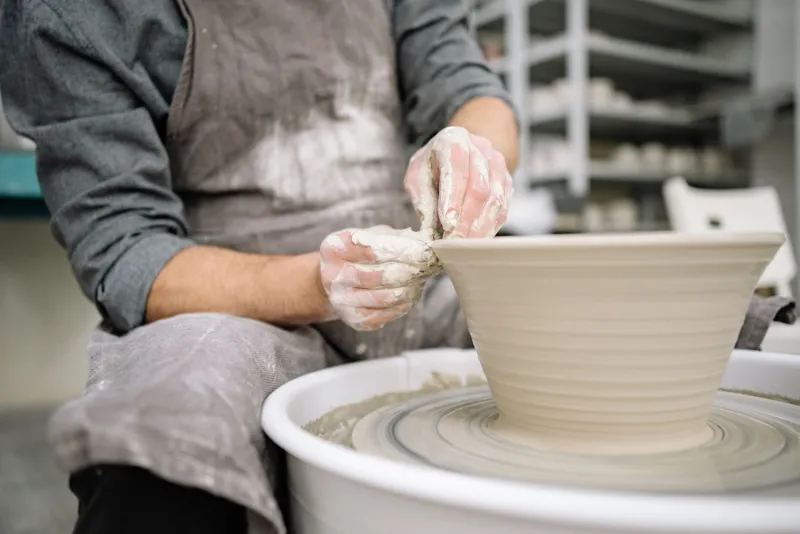
Your Bowl Will Collapse. Go Anyway.
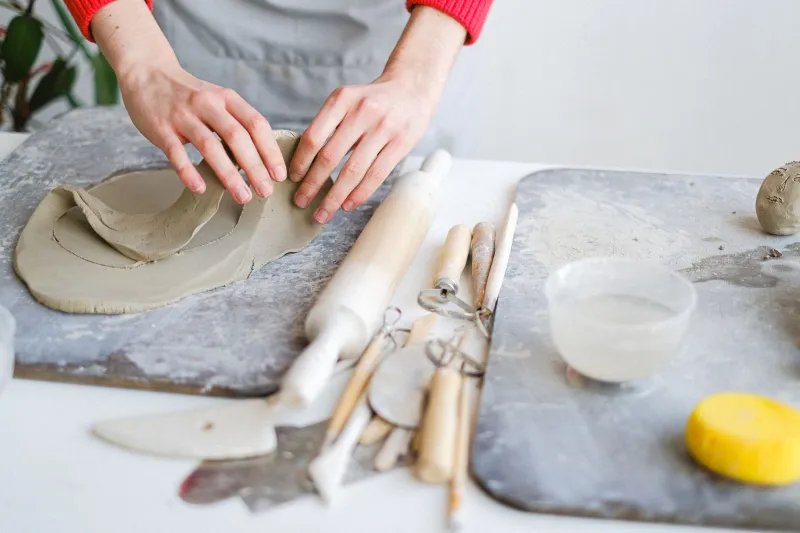
There is a moment, about twenty minutes into any pottery café session, when the bowl starts to lean. You press one side and the other side sulks. You add water and it slumps further. Around you, strangers are making mugs that look like mugs. Yours is making a bid for abstract sculpture. In 2026, Camden’s pottery cafés are full of people having exactly this moment — and discovering that it is not a failure. It is the entire point.
This is not a route to becoming a professional ceramicist by Sunday. It is a route to putting your phone down, getting clay under your nails and making something gloriously imperfect. The magnificently untalented are not just welcome; frankly, they are the target market.
First, the rules of the table
Most drop-in pottery and paint-your-own cafés work on a simple model: you pay a studio fee, then pay for the piece you decorate or the clay you use. Firing is sometimes included and sometimes charged separately, usually £4–£8 per piece. Finished work is rarely ready the same day — expect a two-to-three-week wait while it dries, gets bisque-fired, glazed and fired again. If you need a gift by Friday, buy a candle instead.
The other rule is that nothing is precious. Pottery cafés are not exams. The staff have seen every collapse, every lopsided handle and every glaze combination that looked better in your head. Ask for help early. Wedge your clay properly. Score and slip when joining. And if the bowl goes, laugh, squash it back into a ball and make a trinket dish instead.
Three spots to get messy
The Pottery Café, Hampstead
A short hop from Camden and a good first stop for paint-your-own ceramics. You choose a ready-made bisque piece — mug, plate, money box, small animal with questionable proportions — then paint it with underglazes. Studio fees sit around £12, with pieces from roughly £8 to £30, and firing is typically included in the piece price. It is less muddy than hand-building, more sitting-and-chatting, and ideal for groups who want a table, a tea and a low-stakes creative hour. Book ahead at weekends; half-term in Camden seems to last approximately eleven months.
Mudlarks Ceramics, Kentish Town
A proper drop-in hand-building spot with a friendly, slightly chaotic back room. Pinch pots start at £15, glaze nights are around £22, and firing is £5 per piece. No wheel skills required. The quiet Sunday session is worth asking about if crowds make you wilt, and the team are good at rescuing collapsing walls without making you feel like a toddler. Bring an apron or wear something you do not love. Clay dust gets everywhere, including, somehow, your ears.
Chalk Farm Clay Room
Part studio, part social club. Their hand-building evenings are around £20, often with a bring-your-own-drink policy and a playlist that veers from soul to something suspiciously like prog rock. There is no pressure to produce a masterpiece; the table is full of slabs, coil pots and small wonky creatures. Check access before booking — some sessions are step-free, some are upstairs — and ask about reclaimed clay if you want to keep costs and waste down.
How the money actually works
A realistic first session lands between £15 and £35 depending on what you make. The cheap-looking £15 pinch-pot session can creep up once you add firing, a second piece or a glaze upgrade. That is not a scam; it is the cost of someone else running a kiln, insuring a studio and cleaning up after you. But do ask what is included before you fall in love with a giant platter.
Paint-your-own tends to be more predictable: studio fee plus the price on the bottom of the piece. Hand-building is more variable because you might make one small dish or three increasingly ambitious mugs. Set yourself a budget, choose your piece first, then relax.
When your bowl collapses
First: it happens to everyone. Second: stop trying to make it symmetrical. Asymmetry is a design choice now. Third: turn it into something else. A collapsed bowl can become a spoon rest, a soap dish, a candle holder or a small monument to imperfection. If the base is sound but the walls are slumping, ask a member of staff to help you reinforce the join. If it is truly gone, wedge it back into a ball and start again. No one is marking this.
First-timer kit
Short nails. No rings. Hair tie. Clothes you can ruin. An apron if you have one — most places provide them, but they are not magic. Arrive ten minutes early, especially if you have booked a timed slot. Leave your phone in your bag for the first half-hour. And do not wear long dangling sleeves near a spinning wheel, even if you are only watching.
Why imperfect is the point
Camden is full of people making things in small flats, shared studios and borrowed kitchens. Pottery cafés fit that reality. They are low-commitment, social and gently subversive: they ask you to spend an hour doing something you are not good at, in public, and to enjoy it anyway. In a city that constantly whispers that you should be optimising, monetising or at least posting your progress, a lumpy bowl is a small act of resistance.
So book the session. Wear the apron. Make the wobbly thing. Use it to hold your keys. That is what it is for.