Pinned and Pending: How Camden Makers Read the Noticeboard Underground
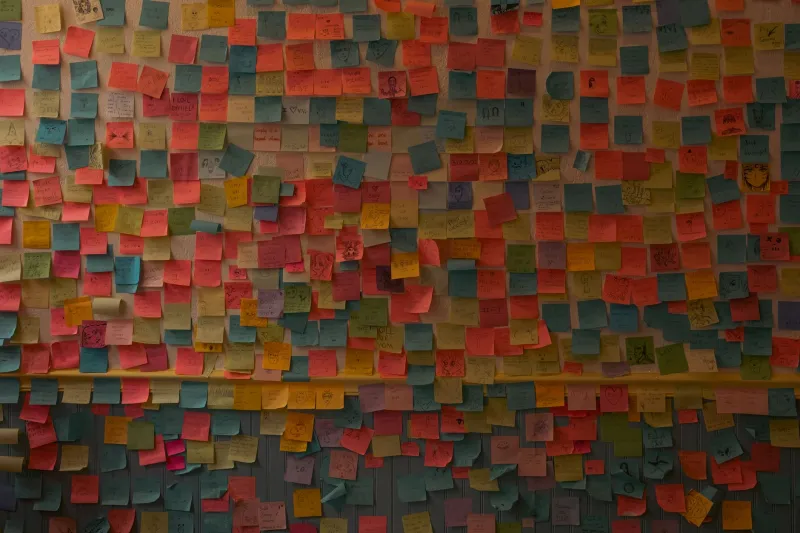
You can learn a lot about a place from its noticeboard. In Camden, the good ones are not the polished posters in a gallery window. They are the corkboards by the library door, the blue-tacked flyers in a community centre foyer, the handwritten tabs promising a kiln share in Gospel Oak or a spare sewing machine in Kentish Town. In 2026, the craft scene still runs on pin and phone, and if you know how to read both, you can find almost anything.
Start with the cork, not the algorithm
Physical noticeboards are having a quiet moment. They are slower than Instagram, which is exactly the point. A board forces someone to commit: date, time, venue, price, contact. It also tells you what a neighbourhood actually needs. A board in Queen’s Crescent might be heavy on cheap studio shares and fabric swaps; one near Swiss Cottage might lean towards evening classes and accessible venues. Look for the details that matter: is the workshop step-free? Is the swap free, or is there a table fee? Does the studio share include storage, or just a corner and a hopeful vibe?
The best notices have tear-off tabs. Take one. It is not littering; it is how the board stays useful. A good tab has a phone number, an email or a QR code that goes somewhere real. If the QR code takes you to a dead link, that tells you something too.
The digital board is a group chat with better manners
Camden’s informal craft network lives in WhatsApp groups, Instagram stories and the occasional Discord server. These are the places where a kiln shelf gets offered at 9pm and collected by 10am. But they are not a free-for-all. The groups that work have a light structure: an admin, a pinned message with the rules, and a culture of searching before asking the same question for the fifth time.
To find them, ask at the counter. Library staff, community centre volunteers and workshop leaders know which groups are active. Follow local venue accounts and look at their story highlights, especially the ones labelled ‘opportunities’ or ‘community’. When you join, introduce yourself in one sentence. Say what you make and what you are looking for. Then listen for a week before posting a link to your shop.
What a good notice actually says
A workshop notice should answer: who is teaching, what level it is for, when and where it runs, what it costs, what to bring, and how accessible the space is. If it is a studio share, it should say the rent, the hours, the storage, the noise rules and whether there is a lift. If it is a materials swap, it should say what you have, what condition it is in, what you want for it, and where it can be collected.
Red flags are consistent: no date, no venue, no price, and a contact that is only ‘DM for details’. Vague is not mysterious; vague is usually disorganised. A good notice is generous with information because it respects your time.
Posting your own notice without being ignored
On a physical board, keep it simple. A5 or A6, one bold headline, five lines of text, tear-off tabs. Put the date at the top. Ask permission before pinning, especially in libraries and community centres. On digital boards, use one clear image and plain text. Do not post a ten-slide carousel for a £5 swap. Put the essential details in the first two lines. Follow up once, then leave it. Reposting every day is not persistence; it is noise.
Offer something as well as asking. A skill swap, a spare table, a bag of clean fabric offcuts, a tea-making shift at the next craft night. The Camden boards reward reciprocity. They are not a marketplace for stolen tools or a place to dump your unwanted acrylics on someone else’s doorstep.
The quiet rules of the board
Take a tab, leave a tab. Credit the person who told you about the opportunity. Meet in a public place first if you are buying or swapping materials. Be honest about condition. If you say you will turn up, turn up, or send a message. These small courtesies are what keep an informal network from turning into a frustrating one.
This November, with winter workshops filling up and studio rents still doing their thing, the noticeboard is a practical tool. It is also a portrait of a borough that makes things together. So next time you are in Kentish Town Library or the Queen’s Crescent community centre, give the corkboard a minute. Read the curling corners. Take a tab. You might find your next class, your next workbench, or the person who finally teaches you to sharpen a chisel without fear.